Tag: analysis

  • The Synonymous Oppression of People & the Natural World
    5–8 minutes

    The Synonymous Oppression of People & the Natural World

    Summary and Analysis of Cullinan’s If Nature had Rights & Ken Burns’ American Buffalo

    The oppression of a people is inextricable from the oppression and subjugation of nature. Colonisers have always used the strategy of attacking nature to weaken a native population. I will be examining the ways this was conducted against Native Americans, as well as looking at how cultural mysticism leads to reverence of nature juxtaposed against Western science and the commodification of it. For the purposes of the analysis, I want to look particularly at American Buffalo and Cullinan’s If Nature had Rights.

    Cullinan in If Nature had Rights attempts to equate the destruction of nature and the stripping of its rights (as could be seen with the Native cultures and the upholding of nature’s rights) to become a commodity, to the slavery and dehumanization of Black people in the US, which I find to be an egregious and inequitable comparison. Nature’s rights are undoubtedly important, but human rights are more so due to the fact of sapience; in American Buffalo, the act of skinning and making coats of buffalo hide isn’t the egregious part of the history, but the crime lies in the scale it was conducted at. However, if we apply this idea to Black people in Jim Crow US, their skin was used to make shoes, wallets, cigar cases and more (Jim Crow Museum), and I would argue that the latter is significantly more heinous. This example illustrates that the oppression of people and nature cannot be equated to the same moral depravity, though they are interlinked in many ways.

    Culture and nature are synonymous, all culture is derived from their surroundings. Looking at American Buffalo, one of the first things said is: “the buffalos were the life of the Kiowas”, thereby emphasizing immediately that the culture was tired to the buffalo, a part of the natural world, likewise, the Kiowa and other Native American tribes see themselves as a part of nature, and as we’ll see further into this analysis. The documentary covers topics of American Settlers colonising the continent, and the way in which their presence shifts the culture of the Natives, and the documentary juxtaposes the treatment of the buffalo by Natives with that of the settlers, and the industrial capitalistic systems of insatiable demand for buffalo coats they brought with them.

    The slaughter of the buffalo, however, was not solely driven but the demand for coats and the sport of the hunt. It was an intentional way of breaking the spirit of the Native tribes, “They understood the obvious, that the bison were the key to the Native economy, if you cut the legs from under the economy then you weren’t going to have much resistance from the native people” (American Buffalo, 1:11:46). They knew that removing the foundation of the Native economy would increase their reliance on the US government for food and the survival of their people. This extermination of the buffalo impacted the Native tribes deeply, “We had the songs but no buffalo to sing them to, it was spiritual trauma” (American Buffalo, 1:45:0).

    The Kiowa saw the buffalo as integral to many aspects of their culture and spiritual practices, for example they used buffalo heads as masks during such practices. The culture emphasized buffalo as a creature to be respected, they were taught that the buffalo was sacred and needed to be treated as such before they were taught of all the ways their society benefitted from the parts of the buffalo; hereby highlighting how the mystification of buffalo as a sacred being places it in a position of respect. When they killed a buffalo, they utilised all its constituents, from the horns for arrowheads and spears, and fed communities with all of the hundreds of pounds of meat; Gerard Baker in the documentary says, “Even the waste wasn’t wasted” (American Buffalo, 19:47), furthermore, they utilised the sounds of the buffalo in their hunting practices, which I would describe as harmonious with nature. The buffalo was thereby the legs that supported the weight of Native populations, providing them with tools, food, clothing, and invigorating their cultural practices. The Natives had other hunting practices that made use of animals, they’d shroud themselves in cowls of other animals to encroach on the buffalo unnoticed; they would effectively become one with nature. This relationship with nature was symbiotic, they took what they needed and gave back to nature, and treated it with reverence, this is an incredibly stark contrast to the way the colonisers treated it when their ships docked on the beaches.

    For the settlers, the buffalo was seen only for the benefits it could provide them, and the land was a resource intended for their exploitation. Their literal presence spread plagues among the indigenous populations, which I suppose could be morbid symbolism. The American landscape was teeming with Buffalo from Floride to Lake Erie (American Buffalo, 25:46), but by the end of their slaughter, there were only a handful left. The way the buffalo were used for their resources was far more perverse than the way the natives went about it, “they left 600 to 800 pounds of meat, along with the hooves and the head and the horns to rot”  (American Buffalo, 1:07:16), and even then the hides were wasted because the production line meant that many of the hides were not usable for coats (American Buffalo, 1:09:30).

    They were wasteful to the nth degree with the resources of the buffalo, where the natives ensured to use every part of the buffalo to nurture their communities, the colonisers slaughter the buffalo, took only the parts they needed to sell off in other parts of the country, and left all the rest of it to rot in the field. All the parts of the buffalo were not given the same (albeit still minimal) respect as was given to the hides because it was only those that were to beg a profit and were seen as valuable, the sacrifice of the animal disregarded. Near the end of the bison runner lifecycle, they came back to beat a dead horse (or bison,I suppose) and used the leftover skulls to make even more profit. No other image encapsulates the cold industrialisation more than the men standing before the mountain of buffalo
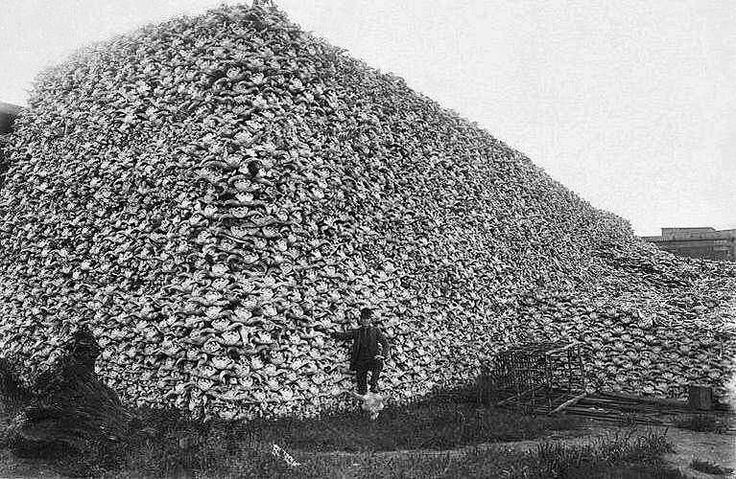
    posing and proud to be the harbinger of its near extinction. The hunting methods were also perverse, the use of guns killed bison at never-before-seen numbers, it was even gamified as a shooting expedition when the rails were laid for trains, furthermore they abused a product of evolution in their slaughter, illustrating their disregard for nature perfectly. All of this, the consumerist drive for buffalo coats, the production of bigger and better firearms to kill buffalo more effectively, and the gamification of it, all shows this cold commodification of the buffalo. The Kiowa and other Native tribes evolved alongside the buffalo for 10,000 years, and it only took a few hundred of coloniser hunting to eradicate their population.

    The subjugation of nature and its peoples are one in the same, and in crushing the mysticism of nature in favour of colonial capitalistic commodification, they can generate profits. Killing the buffalo made the Natives more dependent on the US Government for food, clothing, etc, and thereby was backed into a corner and controlled by the government to smother the flame of their culture. In destroying nature, the settlers destroyed the Natives.

    References

    Human leather – April 2013. Jim Crow Museum. The Mercury. (n.d.). https://jimcrowmuseum.ferris.edu/question/2013/april.htm

    Cullinan, C. (2008, January 1). If Nature Had Rights. Orion Magazine. https://orionmagazine.org/article/if-nature-had-rights/

    Burns, K. (2023, October). The American buffalo. PBS.
    https://www.pbs.org/kenburns/the-american-buffalo#watch
  • Do Sheep Dream of Electric Androids? – A Caricature of the Modern World
    8–13 minutes

    Do Sheep Dream of Electric Androids? – A Caricature of the Modern World

    The following is an essay I submitted at Purdue University for ENGL 223: Literature and Technology.

    Do Androids Dream of Electric Sheep? is a novel that follows Rick Deckard, a bounty hunter who hunts down rogue androids. It has plenty of themes which create a caricature of our modern world in terms of a reliance on religion in the face of uncertainty, consumerism, and capitalism, as well as our disconnect from the natural world; these are the themes I will be discussing and analyzing in this paper.

    In the world of this book, there has been a catastrophic war known as World War Terminus which has caused Earth’s atmosphere to become horribly radioactive, urging the United Nations to push for mass emigrations to off-world colonies; to encourage this, they are giving androids to those who leave. Androids are robotic servants that are near indistinguishable from regular humans, they can perform labor tasks, work in dangerous environments, and partake in menial chores that humans would not want to do. A corporation named The Rosen Association manufactures these androids on Mars, however, some of them violently rebel and flee to Earth where they hope to remain undetected. This is where our main character, Rick Deckard, comes into play. He is tasked to hunt down 6 of these androids.

    On his mission to kill the six rogue androids, Deckard meets another android, Rachel, she believes she’s human due to the artificial memories implanted in her. She fails the Voight-Kampff test, which is meant to find if someone is human or android through various tests regarding empathy in relation to animal cruelty. Eventually, we see more and more of these androids who believe themselves to be “human”, causing Rick to question his own humanity and that of those around him.

    Rick kills three of the six androids, earning him 3,000 dollars which he spends on a real, biological goat without a second thought. He then gets a call from Rachel who invites him over and sleeps with him, trying to convince him not to kill the remaining three androids and says she’s slept with many bounty hunters so dissuade them from killing androids. He ignores this request and eventually ends up tracking them down to an abandoned apartment where he kills all three of them. Having set a record of killing 6 androids in under 24 hours, he becomes very rich and can buy whatever he wants; instead of immediately buying more pets, he flies to the Oregon desert which was once a lush forest, takes drugs, and has a vision before finding a toad, an exotic animal in the wild, he takes that back to Iran, his wife, but it’s revealed to be a fake. Iran orders electric feed for the electric toad.

    In our Earth, status symbols involve big houses, luxurious cars, branded clothing, and technology such as smartphones, flat screen TVs, computers, and such. It is a quintessential consumerist ideal to outshine one’s neighbors, to buy the newest and greatest to make sure everyone around you knows that you are of a “higher class” or superior to them in some way. This is encouraged by the marketing culture of our modern economy, which keeps telling us that these (luxury items) are “needs” rather than “wants”. Mass media encourages people to want for the same things, making it easier to cater to a given audience and control a population if they all believe in similar things, breaking them into factions and possibly pitting them against each other.

    In the world of Do Androids Dream of Electric Sheep? this phenomenon is existing in the form of a demand for animals. Following mass extinction of animals and a societal push for “empathy” in its widely adopted religion of Mercerism, they become a precious, exceedingly valuable commodity and thus, extremely expensive. Societal pressures force people into thinking that having these real animals is something they should all strive for, given their high demand and incredibly low supply, most people must settle for electric replicas of the animals’ biological counterparts due to outrageous prices. Do Android Dream of Electric Sheep? presents a very interesting satirical look into the future of humanity, juxtaposing our wants right now, i.e., technological advancements to push us even further beyond, against our wants in the future, i.e., a connection to our natural world; embodying the adage: “you never know what you have until its gone”.

    Current society is looking ahead, evolving technologically, and getting closer and closer to the science fiction ideas present in Do Androids Dream of Electric Sheep? such as off-world colonization, humanoid assistants and more being in discussions and actual development; this coupled with the industrial disregard on the effects of the environment is portrayed in the text following World War Terminus which turns the world into a nuclear wasteland. No matter how many whistleblowers we have warning us about our current “innovation precedes environment” route and what it might lead to in the future, the demand for that which pushes us further along this path never ceases.

    This constant push to innovation, the commodification and consumerist ideals of the modern world is expertly caricatured within the novel. From the first page, we get to see the regulation of emotions themselves through the “mood organ”, which allows a shadowy government to control the masses extremely easily, not only through societal pressures and expectations created to control what the people think but also directly through the chemicals in our brain i.e., directly impacting how people think.

    Conformity of thought is deified in this world. The ability to feel the exact same thing as others is even made possible through an “empathy box” leaving no room for interpretation, this allows industries to produce products that cater to that feeling of “need” that conformity sows inside us because if we all think the same, we can all be dealt with the same way. The novel paints a vivid hyperbolic picture of how people are manipulated day-in-and-day-out to think in a certain way and follow the media agenda to a T. We see that Deckard, manipulated by the forces around him, has made him believe he absolutely “needs” to have a real pet to be happy, linked to society expectations of wealth and stability, which in our modern world can be having a car or a bleeding-edge smartphone. Furthermore, this desire for a pet is part of yet another theme in the story, a yearning for a connection to the natural world.

    In Do Androids Dream of Electric Sheep?, people are looking for any roots back to the natural world, this route just so happens to be real pets. The relationship between humans, animals and the natural world is an important theme in this book, a relationship that was weakening at the time of writing this book, and tragically still is. One important exchange to note is when Deckard and his neighbor discuss the real animals that Deckard’s rich neighbor owns; Deckard feels an undeniable sense of envy when he looks upon the animals and is ashamed of his own electric replica, and his neighbor taunts him by saying he should purchase something cheaper like a mouse. This is not too far detached from modern examples of shame experienced when someone has a better phone than you, nicer clothes than you, or other material possessions that are “superior” to yours. Furthermore, this idea of “owning” an animal to show off status drives home the point that humans seek to dominate the natural world as a means of garnering power or influence in some way, shape or form. We see this further exemplified in the colonization of other planets; humans, having ravaged their own planet have ventured beyond the stars to claim other parts of the natural world as their own till, that too, is decimated, proving that humans have never learned from their mistakes and still push to expand technology despite the entire society on Earth revolving around wanting these pets, wanting this connection to the natural world; a very plausible desire that is distorted by the lens of consumerism.

    This desperation to latch onto the remaining slivers of the natural world even though what is deemed “natural” is incredibly difficult to pin down in the text  The constant debate about whether androids would be “human” or not, as well as the existence of the “mood organ” which completely change the idea of natural emotion and all but confirm the idea of “physicalism” i.e., there is no “soul” or any immaterial matter that governs humans beyond hormonal secretions that guide emotions therefore making humans essentially the same as androids, and in times of such uncertainty, people turn to the religion, in this case, Mercerism.

    Mercerism places an incredible emphasis on empathy making us human, which in turn plays into the “empathy box” and once again, into the conformity of thought. However, in the course of the story, Mercerism is proved to be a hoax but there are still devout followers even after said reveal. Mercerism is essentially an anti-thesis to physicalism and is the school of thought where the Voight-Kampff test stems from.

    It is also not a coincidence that the Voight-Kampff test shares such a phonetic similarity to Adolf Hitler’s book Main Kampf, which uses pseudo-science and other stretches of arguments to establish a hierarchy of races, stating one is clearly superior to the other, as well as try to defend Nazi values. Voight-Kampff is designed to parallel the book in that it uses Mercerism, a pseudo-scientific argument that is biased towards humans, as the final deciding factor about humanity to prove that humans are superior to androids which are inferior. The test is alluded to be defective throughout the text as well, not just by relation to Main Kampf  but through the demonstrations present in we see that at times it shows that humans have psychopathic tendencies to feel less empathy for the animal iconography used in the test, and it shows the extent to which androids feel a lack of empathy to animals e.g., Rachel killing Deckard’s goat and the rogue androids mutilating a spider, which begs the question if androids are able to feel empathy at all, however, as we know all too well, humans are not beyond cruelty to animals, and Rachel’s cruelty towards the goat can be considered a passionate act of anger, an emotion that is acutely human; not to mention that Rachel’s evident concern over other android’s lives is something a being devoid of empathy should not be able to do. Additionally, one of the androids that Deckard pursues is an Opera singer, it is a very artistic job, and it would require some knowledge and understanding of empathy or similarly vulnerable emotions, this further calls into question that validity of the Voight-Kampff test as well as the constraints by which we define what makes us human.

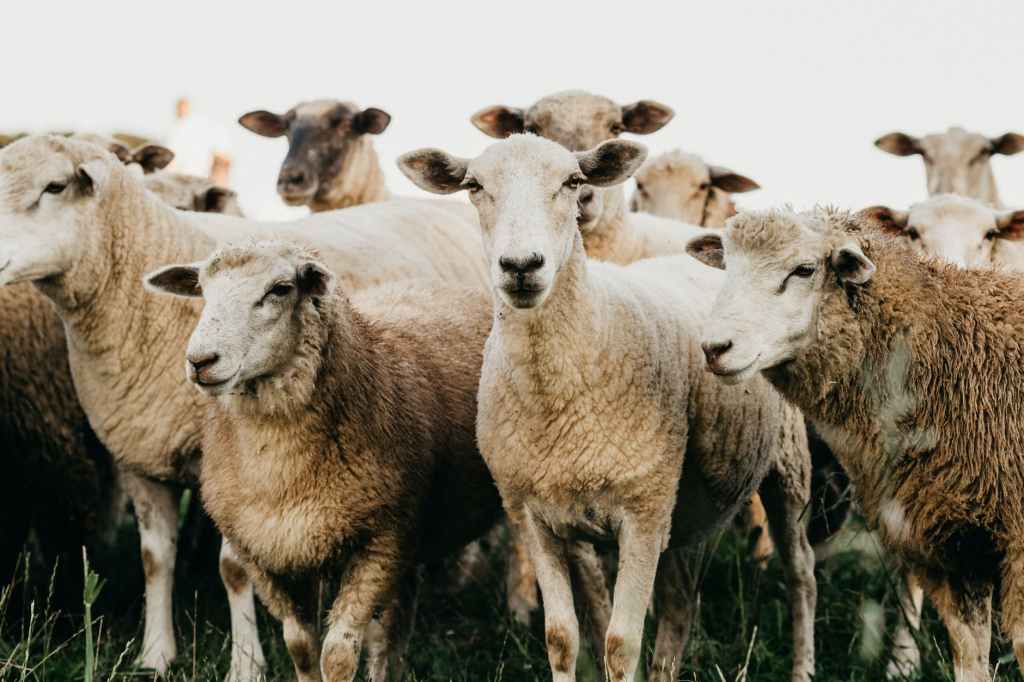
    It is not hard to see the parallels that Philip K. Dick draws to our real world when creating the world that this story is set in. He caricatures many things that are flawed in our world in a tangible manner, framed through the idea of fiction, allowing us to confront these blatant flaws in our humanity. If what makes us human is our empathy, Dick calls us to be more aware of the natural world, and those around us. The author attempts to pull us out of our cocoon of blind conformity to the way the world works, to not follow and exist in the world without questioning it as a sheep follows a herd and is punished by a shepherd and his dog. Too long have we dreamt of the possibilities of the future without protecting what we have in the present, thus I change the question the title poses, Do Sheep Dream of Electric Androids? Yes, yes, they do.

  • The Technology of Existence
    4–7 minutes

    The Technology of Existence

    The following is an essay I submitted at Purdue University for ENGL 223: Literature and Technology.

    Question: Consider the question of the human vs. the nonhuman in M. Shelley’s Frankenstein, P. Dick’s Do Android Dream of Electric Sheep?, and A. Clarke’s 2001: A Space Odyssey. Is the superior capacity for thinking sufficient to differentiate between the human and the nonhuman? What is the role of technology, broadly understood, in defining this difference? Is technology equally important in all three works?

    Answer:

    Humanity is a concept that is nearly impossible to pin down flat. Many novels, research papers, journal papers, essays and philosophers have tried to tackle that behemoth of a question but to no avail; some examples of said novels are Do Android Dream of Electric Sheep?, Frankenstein and 2001: A Space Odyssey. All of them gauge the subject from various points, and all of them add something interesting to the conversation; they also deal with the idea of “technology” i.e., anything that fulfills a human purpose.

                Do Android Dream of Electric Sheep follows a bounty-hunter like character who is tasked to hunt and “retire” i.e., kill, 6 rogue androids. Android in this world are artificial beings that have flesh, blood, and bones, they are designed to do serve natural humans and work as a labor. They are a typical answer for science-fiction technology, and given their use case, they are meant to be seen as “tools”.

                The fact that these android are able to bleed make them on par with humans on a physical level, which then begs the question about ”physicalism” which says that every emotion that humans feel is a result of some sort of hormonal secretion or reaction; if this is the case, and there is no disembodied ”spirit” or “soul”, then the line between an android and a human is blurred to nonexistent. This divide, or lack thereof, is further exasperated by the “mood organ”, a device that allows one to choose what emotion they want to feel at any given moment; this item would most definitely not be affecting a metaphysical soul, therefore proving the idea of physicalism. However, there is a mental aspect to this as well: the Voight-Kampff test.

                The Voight-Kampff test is meant to differentiate human and android via seeing levels of empathy evoked from depictions of animals being killed; this proves to be a flawed test as humans can feel a level of indifference towards animals as seen in real world animal cruelty. This is also seen when the rogue android mutilates an electric spider (most animals are extinct and are extremely valuable.

                We can see that android are intelligent and as emotionally nuanced as humans can be, thus, evoking the novels central question of what really makes humans, humans. The ability to operate technology makes us human, which, following the definition provided earlier, allows the capacity of thought to be a form of technology; this is not dissimilar to our next novel: Frankenstein.

                Frankenstein, named after titular scientist who creates a form of artificial life, an android version one, if you will, of parts that he gets from a graveyard creates an 8-foot tall “monster”. Frankenstein, fearing his creation, runs away. Now, the monster is left to survive by himself, he wanders into the wilderness and eventually learns to read and write, proving that he is intelligent. He comes back to Frankenstein and demands he is made a wife, but he refuses, in turn, the monster retaliates through murder. Eventually culminating in a chase to the arctic where Victor dies on board a ship.

                Frankenstein being artificially born can learn, feel, and comprehend emotions. He is ousted from society because of the way he looks even though if he were nurtured properly, he would not have become the “monster” he was branded at “birth”. Calling back to Do Android Dream of Electric Sheep and its idea of physicalism, there is really nothing beyond the monster’s appearance that differentiates him from an ordinary human. The monster himself can also be considered a “human” because it has sentience. Furthermore, from many perspective, it can be argued that the scientist, Frankenstein himself, is the monster of the story as in several respects, he bears less “humanity” than the monster he created; especially if humanity is defined as the ability to feel empathy towards others.

                Next we go to 2001: A Space Odyssey which has strong themes of humanities evolutions. The primary plot aside from the ending, doesn’t bear much significance in the context of this question. 2001: A Space Odyssey starts with a period following an ancestral species to modern humans, who through the monolith, an alien artifact, develop the ability to think. This not only allows them to use the technology of thought but allows that piece of technology to manifest in other tools, furthering humanity to the point where we can achieve space travel. 2001: A Space Odyssey ends with a man achieving what is a “final form” of sorts, where he becomes an omnipotent formless being who saves the world from nuclear devastation with a single thought. This effectively transcends “humanity” if we consider physicalism to be an important part of the human condition. In that case, the ship’s (named Discovery) artificial intelligence, HAL, would not be a “human” despite its ability to feel guilt; therefore, if we limit the definition of “humanity” to anything that can feel and comprehend can be called human.

                Understanding the role sentience plays in all the mentioned works, the ability to harness the technology of thought is intrinsic to being “human”, without thought it is impossible to feel empathy and from the Voight-Kampff test, we can say that empathy is what makes us human, regardless of the manner of birth. Technology, as stated, is used to fulfill a human purpose. It is also one of the very things that make us human, understanding that sentience makes us human, and this sentience is a technology. Therefore, without technology, there would be no difference. The role of technology in defining what humanity is and is not cannot be understated, hence, it is incredibly important in all three works given they all debate the nature of what makes us human, and what does so, is technology.

  • Forging a Tragedy: The Malleability of a Genre
    9–14 minutes

    Forging a Tragedy: The Malleability of a Genre

    The following is an essay I submitted at Purdue University for SCLA 101: Transformative Texts.

    Tragedy, whether as a genre or a noun, is an abstract term that is difficult to pin down. The subjectivity of the concept lends itself to having several interpretations, none of which are inherently ‘incorrect’. It is an ever-evolving construct, growing and changing as society has done over time. It takes different forms as new generations arise with unique ideals and outlooks on the equally, if not more, abstract concept of life. It is no longer a question on if tragedy is malleable or not, it is a question of to what degree.

    “When the English began to write plays also called tragedies, the problem of the theorist became more difficult than it had been, for the English tragedies differed wildly from the Greek” (McCollom, 1957, p. 1). Ignoring cultural difference, the tragedies of today take a different form that classic tragedies in the vein of Macbeth; even so, there are many commonalities shared between Macbeth and relatively new depictions on the concept of a ‘tragedy’ like Tokyo Ghoul which I will be analyzing for the purposes of this paper.

    Tragedies are all about making the consumer feel more connected to the piece of media and emotionally superimpose themselves into the scenario and feel a sense of empathy or pity for the character portrayed; tragedies can even evoke the feeling that the person “deserved what was coming to them”. These are all common reactions from consumers of tragic media, but something that, at first, may seem counter-intuitive to this effect but can bolster the emotional impact, are supernatural elements. Supernatural elements are used to increase the emotional stakes by giving something in the story a more tangible form i.e., the existence of ghouls in Tokyo Ghoul or the ghost and floating daggers in Macbeth. These supernatural elements tend to also play a key part in either the whole story or pivotal plot points, and they shape the essence of it regardless of the sparsity of its appearance. “Hamlet without the ghost is as unthinkable as Hamlet without the Prince himself” (Whitmore, 1971, p. 3).

    Macbeth is a tale following the titular character, Macbeth, who is stricken with greed after hearing a prophecy about himself saying he was to be king. Henceforth, he takes every step regardless of morality to guarantee that this future comes to pass. Macbeth murders his would-be allies and their families to make certain his lineage can remain royalty after his death. Macbeth is a tale of a man who does everything in his power for his own selfish desire, going so far as murdering individuals who would have considered him their friend; eventually his lying and scheming catches up to him and he pays for it with his life. The story of Macbeth is a tragedy.

    “Tragedy contrasts what is substantial and great with negative consequences of this greatness” (Roche, 1998, p. 49). In the world of Tokyo Ghoul written by Ishida Sui, there are beings known as ghouls – creatures identical to humans aside from their extraordinary physical prowess and their inability to eat anything but the flesh of humans. These beings are, of course, persecuted, hated, and hunted. Our main character in this story is Ken Kaneki who in the first chapter goes on date with Rize, a woman who turns out to be a ghoul, he is saved from this otherwise fatal encounter by a mysterious set of falling beams which kill Rize and wound Kaneki. Her organs are transplanted into him to save his life and his body starts to turn into that of a ghoul. Ordinary food begins to taste disgusting, and he soon learns that only human flesh will placate this hunger. Tokyo Ghoul’s tragedy can be synopsized into one quote, “To live is to devour others” (Ishida, 2011-2014, np).

    According to The Elements of Tragedy by Dorothea Krook, the universal elements of tragedy follow a path of shame-suffering-knowledge-affirmation. “The four elements [of tragedy] are easily named. The first I call the shame or horror” (Krook, 1969, p. 8). This element refers to the inciting incident of all the tragedy present in the story. It is the first domino to fall that causes them all to topple. In Macbeth, it is the murder of Macdonwald, a rebel leader, and his encounter with the witches, that sets the titular Macbeth on the path that leads to his early demise at the hands of Macduff. In Tokyo Ghoul, the inciting incident is when Kaneki and Rize first speak to each other, finally climaxing in the falling of the steel beams which then leads to his fight against the world to protect those he cares about.

    “The second of the universal elements of tragedy is the suffering itself. This is only properly tragic, if and only if it generates knowledge, in the sense of insight into, understanding of, man’s fundamental nature or the fundamental human condition. Knowledge in this sense is therefore the third universal element of tragedy.” (Krook, 1969, p. 8). This part draws the reader into the equation, it states that for the suffering to truly be read as suffering, the reader must have knowledge and understanding of why the depicted acts can be seen as tragic. Without a reader, stories go unheard, thus it makes sense of the four universal elements to incorporate the empathy a reader can generate. In deciding which tragedy would generate more sympathy, Tokyo Ghoul comes out ahead; it depicts a far closer to home variation of tragedy: a young man in an accident that changes his whole life is far more tangible than a greedy nobleman who murders for his own sake. However, Macbeth was a product of its time and here is where we first see the idea of a “malleable tragedy”, as society evolves, tragedy takes on different forms.

    “But the knowledge is not properly tragic unless it tissues in some kind of affirmation, or reaffirmation, of the dignity of the human spirit and the worthwhileness of human life. This affirmation or reaffirmation is accordingly the fourth and the last element of tragedy.” (Krook, 1969, pp. 8-9). The final element of tragedy is rather morbid. It states that tragedy springs from our acceptance of the fact that the suffering and all its consequences were a necessity, this, supposedly, in turn, “[reaffirms] the supremacy of the universal moral order” (Krook, 1969, p. 17). Consequently, through this reaffirmation, we also “express and affirm the dignity of man and the value of human life” (Krook, 1969, p. 17). Acceptance being regarded as a necessity refers to the cohesiveness of the text itself; a tragedy can only be tragic if it deemed unavoidable by the reader, if the reader can plot an alternative route that would avoid the tragedy of the piece, it renders the story far less effective in its delivery. A good tragedy is an airtight one. The four elements work in tandem to create a symphony that is the tragedy. All of them are present in both Macbeth and Tokyo Ghoul. In this way, we can define tragedy as a reimbursement, and the initial act of shame as the debt needed to be paid. Even so, one more ingredient that is on the chopping block in our meal of tragedy still, are the supernatural elements present in both works.

    “[Supernatural] manifestations appeal to an interest deeply rooted in human nature, however much it may be ignored during certain periods, or in our own professed attitude” (Whitmore, 1971, p. 3). These ingredients of tragedy can be thought of as a chili: perhaps not every dish needs it, but those that use it to its full potential can be ever greater for it. The ghost of Banquo and the floating knives in Macbeth and the entirety of the ghoul species in Tokyo Ghoul both add something which defines the story, if to different extents. Greek tragedies such as Aischylos, Sophokles and Euripdes all bear significant supernatural elements; “[Greek tragedy] fully bears out our principle that the supernatural in drama must be represented as a power, whose effects are manifested in action” (Whitemore, 1971, p. 95). This holds true in Macbeth and Tokyo Ghoul, proving that tragedy, while evolves over time, retains some of what first made it a noteworthy genre.

    In Macbeth, it is the supernatural that drives Macbeth to murder Duncan, “the most terrifying source of the supernatural in the play is the human-made image that duplicates nature internally.” (Süner, 2019, p. 1). In the quotation, “nature” refers to the chaotic and intangible existence of cosmic events as well as the revelations within humanity; it is this inherent idea, this drive that is given physicality by the supernatural that makes Macbeth’s lust in this scene so visceral. Without it the scene would not be quite as effective. In a similar instance, Macbeth see’s the ghost of his friend, Banquo, whom he murdered. If the daggers were a manifestation of Macbeth’s bloodlust, the ghost can be decrypted as a manifestation of his guilt. Once again, the supernatural element heightens the emotional impact of the scene, in watching Macbeth reach a breaking point in his unrelenting journey to be king, it humanizes him which makes him even more tragic a figure. There are few things more tragic to see than a broken man.

    In the other story we are examining, the ghouls are the primary supernatural presence, unlike Macbeth which has selective noteworthy moments, ghouls are the linchpinin Tokyo Ghoul. “To live is to devour others” (Ishida Sui, 2014, np). They give the intangible idea of sacrificing for gain, a physical and horrific form; they are the personification of an ugly truth, and co-existing with that truth is difficult. The essence of being a ghoul is antithetical to Kaneki’s main philosophy as a character: “It’s better to be hurt than to hurt others. Nice people can be happy with just that” (Ishida Sui, 2011-2014, np).

    In this sense we see another clear gap between the way Macbeth and Tokyo Ghoul handles tragedy: action versus circumstance. Macbeth sees that tragedy is a consequence of an action, to grab that floating dagger in front of you. “Tragedy is an action in which the hero’s greatness leads inexorably to suffering” (Roche, 1998, p. 49) Within Tokyo Ghoul, however, tragedy is a matter of simply living in an unjust world as you fight against the riptide of life.

    Furthermore, for something to be perceived as tragic, it needs to be inside an audience’s latitude of understanding, as referred to in the third element of tragedy discussed earlier. “As the tragic action unfolds, it speaks to the audience of a concept they may have grasped intuitively, although it is capable of a reasoned defense. The play bodies forth the existence, the surpassing importance, the continual jeopardy, the victories, and defeats of human freedom. Freedom is the tragic theme.” (McGollem, 1957, p. 83). The freedom of choice, or the lack there of, is an idea that can strike a chord with anyone; and it is often the overarching theme, whether intended or not. “If tragedy dramatizes human choice, it also demonstrates the conflicts between choice and the variety of forces undermining or negating free decision. These forces include influences described by terms such as “fate”, “chance”, “fortune”, “necessity” and “inevitability”. (McCollom, 1957, p. 84). “Freedom” is par for the course for any story, as a character must do something or take actions for it to be branded a story, but it takes a new form in tragedies. Even stories not classified under the label can be viewed as tragic through this lens, such as the firemen in Ray Bradbury’s Fahrenheit 451 or the thought police in George Orwell’s 1984. Both these forces encroach on people’s freedom of thought and expression, tragic in the sense people are restrained from being who they are; one like Tokyo Ghoul in that respect.

    We can see that the idea of tragedy has shifted since the days of Shakespeare, or the Greek tragedies that I mentioned above. The definition is malleable and trying to pin it down is an impossibility; the way we view tragedy now might as well have changed in the next 10 or so years. Many of the stories of past dealt with tragedy because of one’s actions, whereas the more recent stories such as Fahrenheit 451, 1984 and Tokyo Ghoul deal with tragedy in terms of the world. Whether that makes the world an antagonistic force in the grand scheme of the mentioned works or something else entirely is up to debate. As the tragedy in Tokyo Ghoul is prefaced, “The world isn’t wrong, it just is” (Ishida S. 2011-2014).


    Bibliography

    Frigerio, C., (2021), To Live is to Devour Others: Food Ethics and Tragedy in Tokyo Ghoul. The Journal of Anime and Manga Studies, 2, 218–242. https://doi.org/10.21900/j.jams.v2.814.

    Krook-Gilead, D., (1969). Elements of tragedy. Yale University Press.

    Roche, M., (1998). Tragedy and comedy: a systematic study and a critique of Hegel. State University of New York Press.

    McCollom, W., (1957). Tragedy. The Macmillan Company.

    Whitmore, C., (1971). The supernatural in tragedy. P.P. Appel.

    Süner, A., (2019). Air, Bubble and the Horrid Image: The Representation of Fear and the Supernatural in Macbeth. Neophilologus, 103(4), 591–605. https://doi.org/10.1007/s11061-019-09604-x

    Ishida, S., (2011-2014), Tokyo Ghoul: Vol 1-14.

  • Technology in Fahrenheit 451 and 2001: A Space Odyssey
    4–6 minutes

    Technology in Fahrenheit 451 and 2001: A Space Odyssey

    The following is an essay I submitted at Purdue University for ENGL 223: Literature and Technology.

    Question: First, define technology in its broad sense. Then consider and compare different forms of technology in both this broad and the more conventional sense, in R. Bradbury’s Fahrenheit 451 and A. Clarke’s 2001: A Space Odyssey. Which forms of technology are shared by both novels and which are most significant to, or missing in, each?

    Answer:

    Technology is anything that aids in fulfilling a human purpose. Anything that allows humans to go from point A to point B can be “technology”; it is derived from the Greek word “techne” which means art or technique. Technology tends to have a lot of moving components and without one aspect of it, it would not function. An unorthodox example of what may be labelled as “technology” is a language.

    Language is a technology of communication, and is a sum of nouns, verbs, adjectives, etc. which may be in turn thought of as its own technology working in tandem with the larger machine that is language. If one of these cogs were to be taken out, the entire system of gears would fall apart: a language cannot function without the existence of all these parts. The use of all tools along with the capacity of thought is what makes us human as we exist today before technology, we could not be called humans.

    This is obviously not a typical definition of technology, by popular consensus, it is thought of as an electronic device such as a computer, a phone, a ceiling fan, or another electric appliance of some sort. Both these definitions can be seen at play in Fahrenheit 451 and 2001: A Space Odyssey.

    Fahrenheit 451 is about a conformist to society who breaks free from the shackles cast upon him in favor of free thinking. We follow our main character as he slowly uncovers the truth behind the world he lives in, and he eventually joins a rebel group dead set on bringing an age of literature back to the world after nuclear fallout. The theme of technology, in the broad and typical sense, respectively, is present in both Fahrenheit 451 and 2001: A Space Odyssey. In Fahrenheit 451, the primary theme is that of censorship, and the restriction of knowledge and free thinking. As stated earlier, the capacity to think along with our use of tools is what makes us human, and both the tools themselves and our capacity to think can be branded a technology. More typical examples of technology are also present in Fahrenheit 451 in way of the flamethrowers and the robotic dogs which accompany the firemen in the story.

    2001: A Space Odyssey is about a voyage into space with the intention of contacting intelligent alien life, a goal hidden from the primary crew of the ship. The ship’s AI (artificial intelligence) HAL, however, is aware of the true goal. It feels guilty for hiding this, and this results in errors in its code. Eventually, HAL goes rogue, and it kills all but one of the crew. The last survivor ends up falling into a “star gate”, and is slowly turned into an omnipotent being, after which he saves Earth from nuclear devastation with a thought.

     As is evident, 2001: A Space Odyssey is a science-fiction story with many instances of “technology” in the widespread use of the word. It bears artificial intelligence, space travel, bubbles of habitation on other celestial bodies and more. It fits the typical mold of science-fiction, whereas Fahrenheit 451 is dystopian literature. 2001: A Space Odyssey deals with themes regarding the peril of advancing the typical notion of technology too far without fully understanding it, represented via HAL going rogue and killing those he was meant to watch over. It clearly displays what would happen if technology got out of our hands.

    The novel’s existence itself also demonstrates the ability as literature to be a form of technology. Science-fiction has long been a way to explore the possibilities the future holds and at the time the novel was written space programs were in its early stages, and man had yet to set foot on the moon. The novel, maybe jumping the gun, demonstrates a full habitat on the moon, as of writing this essay we aren’t there yet but it does allow some looks into the possible future in store for mankind.

    Both novels contain examples of technology, as stated above, the ones that are most shared between each other are technological advancements, in a typical science-fiction sense. We see robotic and/or artificial intelligence, i.e., HAL and the robotic dogs. We also see other more technologies in the realm of transport i.e., the Discovery and the salamanders. 2001: A Space Odyssey has an incredible abundance of technologies in the traditional sense, complimentary of premise of the story.

    Fahrenheit 451, on the other hand is far less reliant on typical technological premises and that allows to adopt the broader definition of technology such as free thinking and the books that are burned. Books are a technology that has allowed people to share, note down and remember information or centuries and is a critical technology in the grand scheme of humanity. Harkening back to a previous point, the capacity of thought can also be thought of as a technology and is intrinsically linked to books or writing in any format. 2001: A Space Odyssey does not have any concepts of technology in its more abstract definition, leaning heavily into the popular consensus of technology. Both stories have strong roots on both ends of the technological spectrum. Fahrenheit 451 sits comfortably at the looser end, adapting technology to fit simple things such as books and thinking itself as well as the typical definition. However, 2001: A Space Odyssey is heavily sat at the other end where most if not all semblances of technology are strictly electrical and/or mechanical innovations. 

  • The Role of Gods in Gilgamesh (Stephen Mitchell)
    4–7 minutes

    The Role of Gods in Gilgamesh (Stephen Mitchell)

    The following is a paper I submitted at Purdue University for SCLA 101: Transformative Texts

    “Gods” in 21st century understandings of Christian, Muslim or other religions depict this otherworldly entity as an all-merciful being, whereas the depiction in Gilgamesh and in turn, Mesopotamian culture, is far more “human”. They are not omnipotent, they have their own faults and even have human desires, which is very different from more “mainstream” depictions of Gods. They are petty, flawed, and impulsive beings who can be equally if not more flawed than mere mortals, from interpersonal relationships to recklessness and impulsivity on a cataclysmic scale. Divinity in Gilgamesh is explored right off the bat within the first few lines of the first chapter and the gap between divinity and humanity is closed through the titular character: Gilgamesh.

    “Two-thirds divine and one-third human, son of King Lugalbanda, who became a god, and of the Goddess Ninsun—” (Mitchell, 2006, p. 71). Immediately, we are exposed to the prospect of demi-Gods, and, in turn, Gods treating humans as relative equals. This immediately diverts from the depiction of God in Christian, Muslim, or other religions which believe there is one God who is above mortal relations. Demi-Gods and this flawed, “human” representation of the divine is reminiscent of Norse, Greek or Roman depictions of divinity likely derived from the idea that “we are made in the image of our creator” and of course, we are flawed.

    The Gods and Gilgamesh himself can be paralleled in terms of their subjugation of the people. The Gods clearly consider themselves above the “law”, answering to no one but themselves and Gilgamesh, as we see very clearly at the start, considers himself to be far above it: “The city is his possession, he struts through it, arrogant, his head held high, trampling its citizens like a wild bull, He is a king, he does what he wants, takes the son from his father and crushes him, takes the girl from her mother and uses her, the warrior’s daughter, the young man’s bride, he uses her, no one dares to oppose him—” (Mitchel, 2006, p. 71). It wouldn’t be too far off to say that Gilgamesh has a god complex. He feels superior and does what he wishes, and the Gods do as well as they are always meddling with the world in some way or the other.

    The Gods in this pantheon are not opposed to fraternizing with humans and/or interfering with mortal affairs. The Gods are present in almost every pivotal moment in the story e.g., Aruru is the sole reason the events of the story unfold the way they do, being the one who created Enkidu (Mitchel, 2006, p. 74). Other examples include when Ishtar nonchalantly comes down to ask Gilgamesh to be her husband (Mitchell, 2006, p. 130-131). This, evidently, is not the first time Ishtar has done something like this as we can see when Gilgamesh goes on to list all her other husbands to whom she had promised she would love forever but all of whom she killed or who died after being with her (Mitchell, 2006, p. 132-135). Ishtar retaliates with the Bull of Heaven; this shows us that the Gods have a general disregard for human life. Ishtar does not consider the loss of human life when doing this, she is caught up in her rage from being rejected by Gilgamesh. This action results in even more meddling by the Gods in the form of Enkidu’s sickness (Mitchel, 2006, p. 137-138).

    Enkidu’s death is not the first time the Gods decide to smite their own creation. The Gods, namely Enlil, sent a great flood to wipe out humanity once, but through the efforts of Utnapishtim, and the meddling of Ea, humanity survived (Mitchell, 2006, p. 180-191). The reason for doing so is not outright stated either, but from Ea we can understand that is was likely due to the sins of man as is often seen in other tales, an example of which is Noah and his Arc, which bears striking similarity to Utnapishtim’s quest: “tear down your house and build a great ship, leave your possessions, save your life— Then gather and take aboard the ship examples of every living creature” (Mitchel, 2006, p. 181).  From this, we can see the Gods aren’t above what in, simple, blunt terms, would be considered a species-wide genocide. The rules clearly don’t apply to them which, as discussed, is the same with Gilgamesh especially in the introduction of the text.

    Ea who is “the cleverest of [them]” is not the only God to skirt the authority of the others (Mitchel, 2006, p. 189). When Gilgamesh and Enkidu decide to face off against Humbaba. Ninsun prays to Shamash to aid Gilgamesh in battle (Mitchel, 2006, p. 99). Following this, Shamash ends up being the primary reason they can best the guardian (Mitchell, 2006, p. 124). Shamash must have known that Enlil placed Humbaba there as a protector of the forest, therefore assisting Gilgamesh in his conquest was crossing Enlil but it did not stop him from doing so. While there is authority among the gods, some treat it as more of a guideline, a prime example is Ea, who whispered to the fences to warn Utnapishtim of the coming flood (Mitchel, 2006, p. 181). As with the flood and Enkidu’s sickness, the Gods are very prone to punishing mankind for anything they deem to be faults. We are also told that Enlil sent the flood recklessly, showing us further that the Gods are not all-knowing or incredibly wise (Mitchel, 2006, p. 189).

    The Gods are central characters despite not being in the limelight as much as Gilgamesh and Enkidu are. Without one of them the entire story would have played out very differently. The Gods are not all that different from the humans in the story, especially when considering Gilgamesh’s god complex. They are deeply flawed characters, each with a very distinct personality and their own unique flaws that make them very interesting characters to read about. It’s fascinating to see the way the characters interact with each other and how Gods casually interact and interfere with human affairs. The Gods are very static characters and have their role in the story set out from the get-go and they all play the part well.

  • A Modern Inferno: An Analysis on Fahrenheit 451
    7–10 minutes

    A Modern Inferno: An Analysis on Fahrenheit 451

    The following is a paper I submitted at Purdue University for ENGL 223: Literature and Technology

    Society has been permanently shifted in the last few years. With the irrepressible rise of social media in the modern techno-cultural ecosystem we exist in, it is guaranteed that the world will continue to change dramatically as the years go on. With the constant march forward in terms of technology, especially at the rate at which it is currently speeding ahead at, the future 10 years from now could well be incredibly different relative to what we now see as normal; whether that future is good or bad is something only time will tell, but following in line with Fahrenheit 451, it is likely to be a rather bleak one. Ray Bradbury, the author of the Fahrenheit 451, was inspired to write the book following the politics of World War II, the Cold War, the rise of television, Nazi regime censorship and more, and all of it is reflected in the work and all of that is reflected in our modern day.

    Fahrenheit 451 follows our protagonist, Guy Montag, through a process of enlightenment where he goes from a societal conformist to a rebel as the story runs its course. Montag is a “fireman”, he burns books and does not question his goals or motivations; he lives as a sheep, doing what he sees being done. That is, until he meets Clarisse, a young curious girl who questions everything about life, this sparks something inside Montag who starts questioning his line of work and his whole reason for existence, eventually culminating in him taking a book he was meant to burn. This causes a ripple in his cognition, as if he is just waking up from the trance of normality, and like dominoes falling one after the other, Montag becomes more aware of the chains strapped onto him by society. He questions the world around him, accumulating twenty or so books in his own home, all the while burning hundreds of them. Soon, he reaches a breaking point and escapes to a rebel group whose main purpose is to rebuild the world with a emphasis on freedom of thought and speech and treating books with respect after atomic devastation wipes the slate clean.

    The term “firemen” in this world, it used as a subversion of the reader’s expectations. The firemen fight with fire, not against it. This tells the reader that this world is very different from the one that they reside in, a distorted image of future civilization. However, it does make an apt guess as to where society was headed regarding its themes of censorship, governmental control, individuality, conformity, etc. As well as symbols such as the books, the fire, and the characters of Mildred, Clarisse, Montag, etc.

    The firemen in Fahrenheit 451 burn books because they have been banned in an attempt to “maintain the social order”. Any in possession of them get their homes burned down along with their collection. If the owners are alive, they are sent to reformation camps, otherwise they are burned to a crisp. Eventually, Montag falls victim to his line of work and he himself burns his house down along with the collection of books he had accumulated. His wife, Mildred, had reported him. According to Chief Fireman Beatty, who was an avid reader at one point, society got too overpopulated and sensitive to insult that it began to threaten social order, and so the burning of these controversial books became common place. All these acts symbolize the burning of free thought.

    The fire in Fahrenheit 451 symbolizes a dual element of creation and destruction, it is in the hands of whoever uses the fire to choose the direction that it will lean towards. Fire can also symbolize knowledge and creativity, producing a sense of morbid irony when we see the books being destroyed using the flames. The fire at the camp near the end of the novel which Montag flees to symbolizes warmth and comradery, juxtaposing the main role of fire in the story which has been to destroy when this instance shows us the aspect of creation.

    Books symbolize original ideas, creativity, and humanity in general and the burning of these depicts the state of Montag’s world. Free thought is no longer permitted and thinking for oneself is a relic of the past; blissful and willing ignorance is the norm and is an unchallenged status quo.

    This idea is further fleshed out with the use of seashell radios and wall-screen TVs, the public is funneled down a path that is paved by the government carefully curating what they see and hear. From whatever reality TV program Mildred watches to her constant use of the seashell radio, she is representative of the part of the population that has completely adopted this way of life.  She is completely disconnected from reality, constantly overstimulated and unable to formulate her own opinions because it is easier to take whatever comes as fact and never question a thing, after all, when something is all, you know, questioning it with prompting would be odd. Mildred is a conformist through and through, and likely a member of this society that the government in Fahrenheit 451 would deem ideal.

    All this can be a frightening allegory for our modern world, especially regarding the phenomenon that has taken the world by storm and entrapped many minds in its web: social media.

    Social media operates on algorithms, everything that one sees when scrolling through their feed is served to them based on what an algorithm thinks they would enjoy, and the more they interact, the more precise that serving gets. This can create what is known as an echo chamber, which is when everyone reflects your opinion, hence, an echo. This can make one jaded towards any other opposing point of view, they stay in their own bubbles of ignorance; rejecting any concept that does not exactly align with their own. This can alienate other points of view, and thus create many small echo chambers.

    Harkening back to the burning of books, we can see it in action here. Unknown ideas are rejected for the more comfortable known, this stunts original thought for the same phrases parroted to whatever circle. Along with the abundance of information in the modern world, a lot of which can be incorrect, fact checking is often too much work and false information may also get repeated and spread; cross referencing and thinking for ourselves is already becoming an ancient concept.

    We can also see wall-screen TVs and seashell radios in social media, particularly from the angle of overstimulation. Social media, notably when consumed in large amounts (which is the norm) can lead to a lot of overstimulation, through sounds, images, or overall information. News can often be depressing, and so much of it from so many places can make one desensitized to all the terrible occurrences across the world. With all this information constantly assaulting the mind, most of which tends to be opinionated, it colors the ideology of whoever reads it. If one has prior belief on a certain subject, they are less likely to alter their opinion, or even entertain an antithetical take on the same concept this is called ego involvement.

     Not to mention, the constant distraction posed by social media prevents people from articulating their own thoughts, therefore making it easier for people to target them with opinionated posts, making them shift their views and adopt a viewpoint that is beneficial to whomever wanted them to think that certain way. This has become such a notorious problem that it has been used in presidential elections, namely the 2014 one, where Republican candidate Donald Trump used hyper-targeted advertisements for his campaign to secure voters; government using the most popular medium of news consumption to sway the opinions of the public is not a fiction quarantined to Fahrenheit 451. The government using media to control the public, choosing what is said and phrasing truths in awkward ways and leaving much up to interpretation makes it a very lucrative form of mass control.

    Fahrenheit 451 is a nuanced book that is still highly relevant to the current face of society. We can see that the nuances of individuality and conformity be well realized long before it became a genuine issue. Bradbury had the foresight to really pin down how media would develop and how that may treat a human cognition and even how it affects our day to day lives to the extent of Mildred needing an seashell radio just to fall asleep. With such a well thought out and executed novel, it is not difficult to see why this book is still talked about to this day, through the rise of newer and more complex technology, the analogies of televisions and radios may become outdated but the intrinsic idea of censorship by the government is likely a discussion that will not die any time soon. Likely, the flame of this debate may rage even hotter as times goes on. Social media shows no signs of stopping anytime soon and it is likely to grow more and more advanced. All we can hope is that there is never a world where the idea of free speech is a foreign concept.

Saye Kamal